

A chevrusa in your pocket
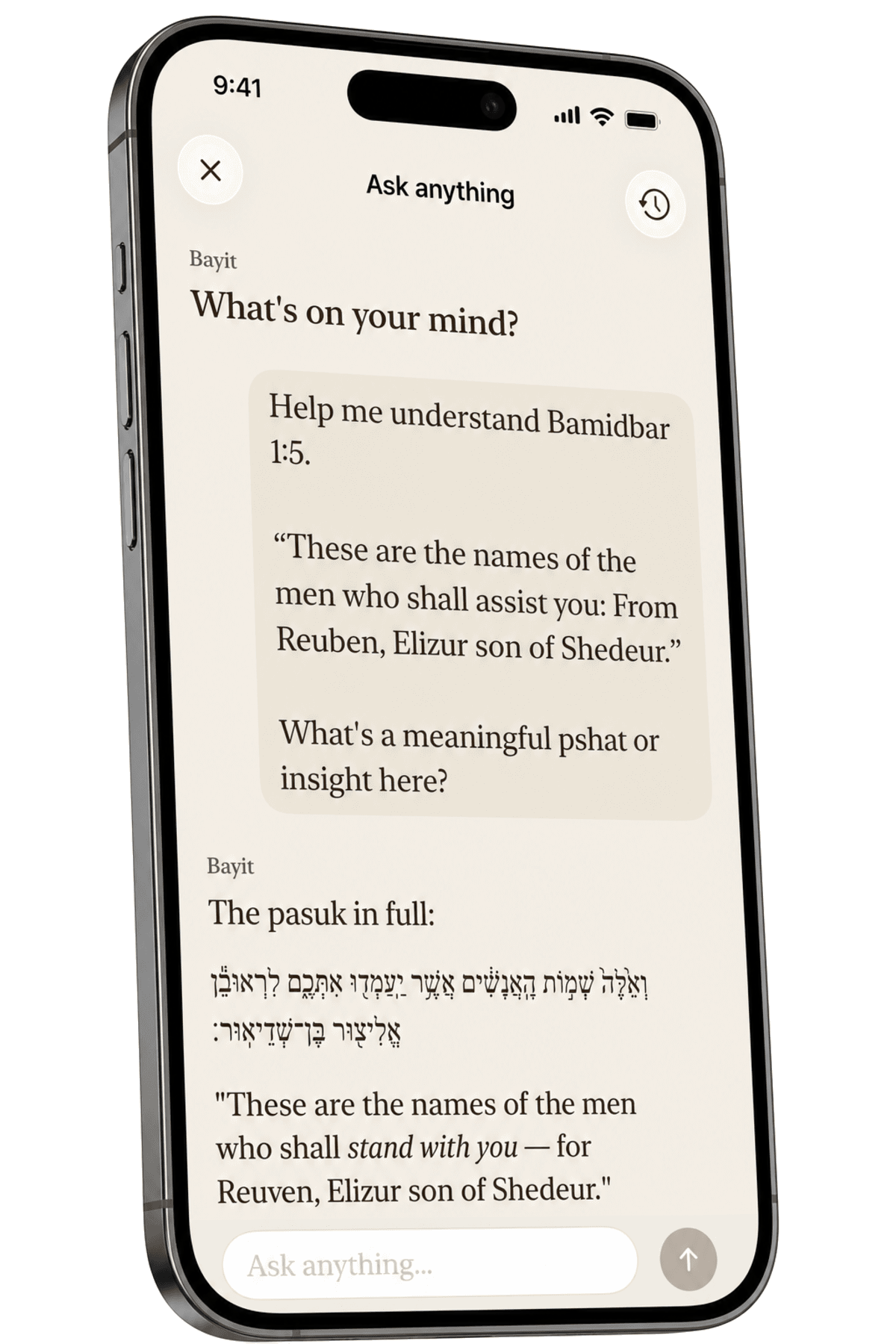
Ask anything. Get answers with the sources quoted, never paraphrased.
- Shalom Bayis
- Parnassah
- Chinuch
- Tefilah
Five quiet minutes a day. This week's parsha, a prayer for today, answers with sources, and lessons to read the prayers in Hebrew.

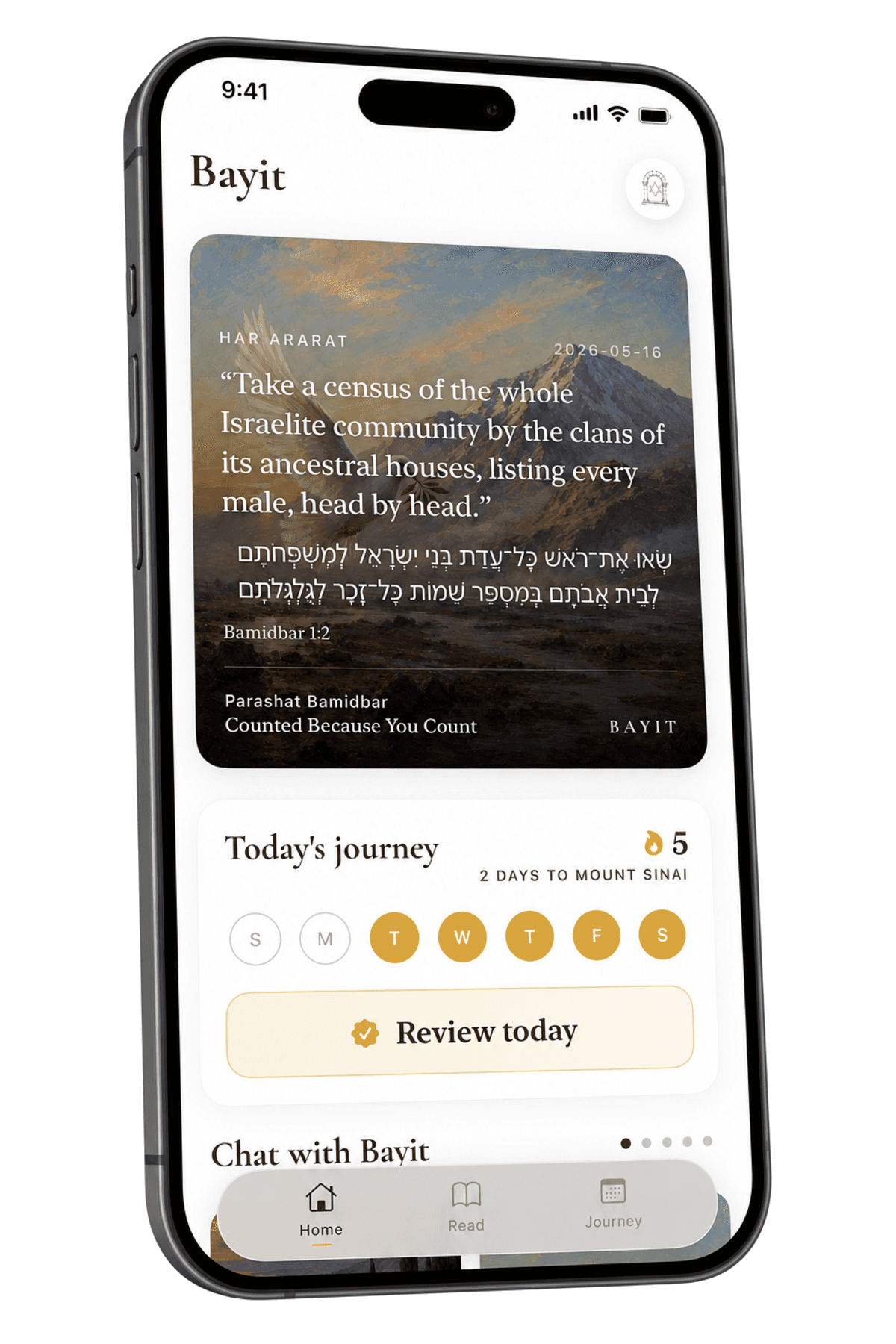


The daily plan

Start from how you feel today.

A short teaching on this week's parsha.
A tefilah for today. Hold to say Amen.

Unveil a new painted postcard.
Inside Bayit
Ask anything. Get answers with the sources quoted, never paraphrased.

Twenty-four short lessons, from the first letter to Modeh Ani and the Shema. Then read aloud to a teacher who listens.
מוֹדֶה אֲנִי לְפָנֶיךָ
Hebrew and English side by side, plus Daf Yomi.
Today's daf
Candle times, a Friday reminder, and the brachos.
Candle lighting times
Your streak, the parsha, and a Shabbos countdown.

No fluency needed. Ashkenaz, Sefard, or Edot HaMizrach.
The streak journey
23 painted postcards, from Gan Eden to Meron. Three grace days a month.


 First light
 Three mornings
 A full week
 Two weeks in
 Thirty days
 Perfect week
Shabbat · Fri, Nov 20
18 minutes before sunset. Havdalah at nightfall.

| City | Candles | Havdalah |
|---|---|---|
| New York, NY | 4:16 pm | 5:17 pm |
| Los Angeles, CA | 4:28 pm | 5:26 pm |
| Miami, FL | 5:12 pm | 6:06 pm |
| Chicago, IL | 4:07 pm | 5:10 pm |
| Boston, MA | 4:00 pm | 5:03 pm |
| Baltimore, MD | 4:30 pm | 5:30 pm |
Questions
Bayit is a daily Jewish learning app for iPhone. Each day it gives you about five quiet minutes: a short teaching on the weekly parsha, a tefilah for the day, and a place to ask any question about Torah and Jewish life, answered with the sources quoted from Sefaria's library.
No. Every text appears in Hebrew and English side by side, and the daily teaching and conversations are in English. If you want to read the prayers yourself, Bayit has a course for that: 24 short lessons that take you from the first letter to Modeh Ani and the Shema, with a teacher who listens as you read aloud.
Anyone who wants Torah to be part of an ordinary day: people coming back to learning, people who never had the chance, and people who learn a lot and want a steady daily anchor. Bayit draws on traditional sources and lets you choose Ashkenaz, Sefard, or Edot HaMizrach.
In one way: it is built around a small daily habit. Each day you learn moves you along a streak journey of painted postcards, with grace days for when life gets in the way. But it is not a drill-based course. The point is a few quiet minutes of learning and prayer, every day.
Bayit is an auto-renewing subscription of $5.99 per week in the US. It unlocks the daily learning plan, unlimited questions, the Hebrew course and its teacher, the streak journey, and the Tanakh reader. The App Store shows the price in your local currency, and you can cancel anytime from your Apple Account settings.
From Sefaria's open library of Jewish texts. Translations are public domain or Creative Commons editions, credited per passage in the app, and every answer links back to the source it quotes.
Not yet. Bayit is available for iPhone on the App Store.
